

Tomoki Nagano
Chairman & Chief Executive Officer, INSTINCT BIO TECHNICAL COMPANY HOLDINGS INC. (Nasdaq: BIOT).
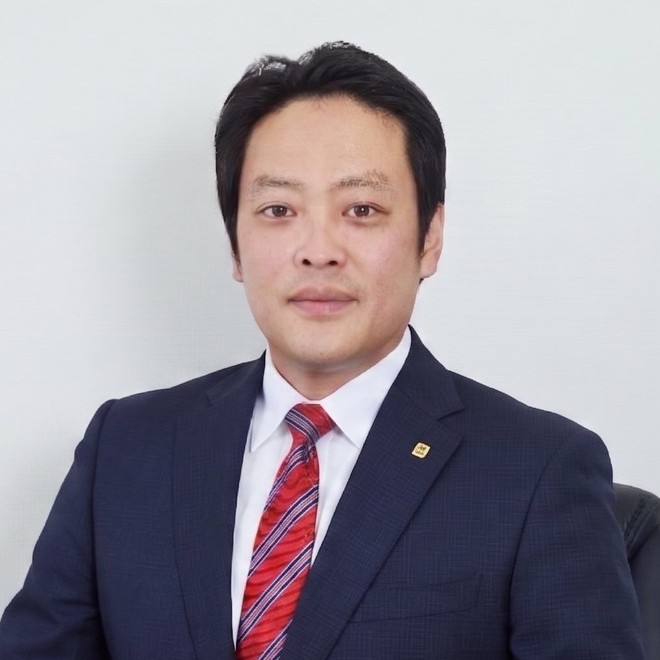
Tomoki Nagano
Chairman & Chief Executive Officer
- Group Management
- Brand Strategy
- Capital Strategy
Biography
Born in 1981 in Yamaguchi Prefecture. After a career in the cosmetics industry, he founded HIROKI GLOBAL Co., Ltd. in 2017. He became Representative Director & Chairman of INSTINCT BROTHERS Co., Ltd. in 2021, and has also served as its CEO since 2022. He leads the Group with the motto of 'bringing joy and smiles to as many people as possible.'
He oversees all aspects of management, from shaping the Group's vision and directing the brand portfolio to capital strategy and investor engagement. Committed to sustainable growth and the creation of social value, he identifies new opportunities at the intersection of biotechnology, beauty, and wellness.
He also focuses on building relationships with partners both in Japan and abroad, advancing global expansion starting with Southeast Asia, and strengthening governance across the Group.
This profile contains only verified information already published by the company.
Recent essays
CEO Essays·
Know the World's Festival Calendars — Commerce Has More Than One Calendar
A Japanese merchant's body carries the Japanese calendar: New Year, the end of the fiscal year, Obon, the year-end shopping season. Step abroad, and that calendar no longer works on its own. Lunar New Year is said to set hundreds of millions of people in motion in the Chinese-speaking world, one of the largest seasons of travel and shopping on earth.
ReadCEO Essays·
Making Time Zones a Weapon — Building a Company That Never Sleeps
When I first began working internationally, time zones felt like the enemy: midnight calls, replies a day late and a body clock thrown off balance. Used well, time differences can help build a company that never sleeps. Hand work over at the end of Japan's day, and Europe's morning picks it up; the Americas carry it further; by the next morning in Japan, results come back.
ReadCEO Essays·
Business Customs of the World — A Contract Means Different Things
One of the first things that puzzles Japanese companies in international business is that contracts can mean different things in different places. In one, the contract is the starting point of a relationship: thick, written to anticipate every situation, with the clauses becoming everything once signed. In the other, it confirms a relationship of trust and can be discussed and adjusted when circumstances change.
ReadCEO Essays·
Living with Exchange Rates — Don't Rage at What You Cannot Change
Doing business across borders means facing one unavoidable counterpart: exchange rates. When the yen moves, the profit from the same work can swell or disappear. The first thing a manager should settle in the gut, I think, is that currencies are not something to predict but something to prepare for.
ReadCEO Essays·
Even Through an Interpreter, Look Them in the Eye
In overseas negotiations, I keep one habit without fail: even when speaking through an interpreter, I look at my counterpart, not at the interpreter. Many people naturally face the interpreter, since that is who understands them. But when that happens, the meeting slips into a third-person world of "he says that…" When I look the other person in the eye, use gestures and speak with my own voice, warmth and sincerity seem to arrive directly even though the words pass through someone else.
ReadCEO Essays·
Localization vs. Standardization — The Eternal Tug-of-War
Every company working internationally eventually meets a tug-of-war: how much to keep common worldwide and how much to adapt to each place. Make everything standard and efficiency rises, but you drift from local hearts. Adapt everything and you may be loved, yet quality scatters and the brand's core dissolves.
ReadCEO Essays·
World-Class Quality Is Designing for "Whoever Makes It"
Japanese factory floors have masters — people whose long-honed intuition spots tiny differences and makes adjustments machines cannot. Yet when going global, a system that depends on masters can become a weakness rather than a weapon. Add plants, partner with colleagues abroad, or multiply output tenfold, and the question becomes whether the same quality appears without the master present.
ReadCEO Essays·
What Sushi's Globalization Teaches — An Alliance of the Authentic and the Variant
Today there is sushi in nearly every city in the world. I have long wondered how a dish of raw fish spread so widely among people with no custom of eating it. History points to an interesting doorway.
ReadCEO Essays·
Learning from Nissin — An Invention Shaped Like the World's Kitchen
I wrote in #107 about Momofuku Ando's fresh start at forty-eight. Here I want to consider why his invention became something eaten all over the world. Global consumption of instant noodles is now said to exceed one hundred billion servings a year — more than ten times the world's population.
ReadCEO Essays·
Learning from Yakult — One Small Bottle, Forty Countries and Regions
Among Japanese companies active worldwide, I know of none as distinctive as Yakult. It is said to deliver one small bottled drink to around forty countries and regions, and at the heart of its sales lies hand-to-hand delivery by people known as Yakult Ladies. The first lesson is focus on a single product.
ReadCEO Essays·
Learning from Kikkoman — From 300-Year-Old Soy Sauce to a World Seasoning
How did a soy sauce brewer from Chiba make its way onto the world's tables? Kikkoman's story may be the finest textbook for a traditional industry going global. After the war, the company is said to have challenged the American market in earnest — but not by simply "selling soy sauce." Instead it showed that soy sauce goes well with meat.
ReadCEO Essays·
Learning from Nintendo — Play Needs No Translation
A company said to have been founded in 1889 as a maker of playing cards in Kyoto found its way into homes all over the world. What Nintendo teaches, I think, is how to choose what to deliver. Nintendo exported not machines but play, which may be a shared human language that needs no translation.
Read